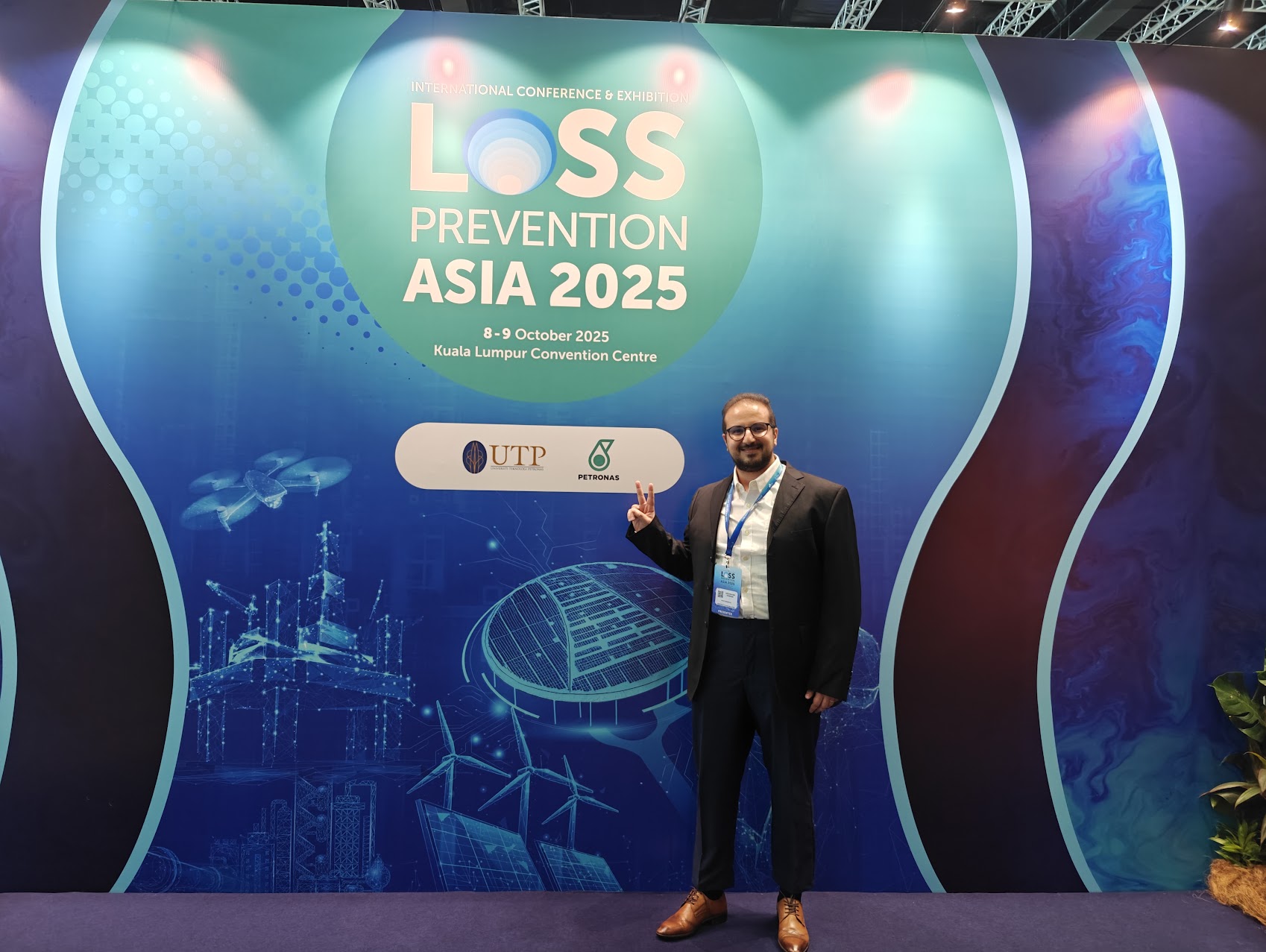
Dr Abderrahim Zermane

Fire, process safety and risk analytics. I develop physics-based urban fire models, explainable analyses of occupational accidents, and evidence-led systems that turn complex safety information into decisions people can use.

Dr Abderrahim Zermane, fire and process safety researcher
PhD in Process Safety and Reliability Research Fellow, University College London (2023–2025)
City-scale scenario modelresearch workflow
Ignition or exposurePropagation pathwayBuilding stock
11peer-reviewed articles and chapters
3,321fatal-fall accident scenarios analysed
UCL + UPMresearch and teaching experience
End-to-endevidence, modelling, software and communication
01

Research focus

I work where hazard physics, incident evidence and practical safety decisions meet.

A

Urban fire dynamics and resilience

Physics-based and reduced-order fire-spread models for city-scale scenarios, tenability reasoning, uncertainty mapping and multi-hazard integration.

  • Exposure-to-fire modelling
  • Scenario planning and V&V
  • GIS-informed urban analysis
B

Explainable safety analytics

Structured learning from accident records using statistical analysis, fault trees and interpretable machine learning to identify prevention priorities.

  • FTA, ETA and Bow-Tie
  • Random forest and tree models
  • Calibration and class imbalance
C

Decision-support systems

Research software that converts reports, regulations and evidence chains into reviewable findings, auditable workflows and defensible outputs.

  • Environmental review
  • Design-safety assurance
  • Regulatory evidence mapping
Core strengthReproducible methods
Working styleEvidence before assertion
OutputDecision-grade communication
ToolsPython, QGIS, ML and risk models
02

Selected research and main findings

A concise view of what the studies contribute, not only where they were published.

Safety Science · 2022Fault tree analysis

Fatal falls: from causes to quantified pathways

Analysis of 128 fatal cases found high occurrence of inadequate supervision, failure to use PPE, and absent or poorly followed work standards—showing where prevention systems must intervene first.

Supervision and leadership89.84%
PPE not used85.93%
Work standards85.15%
Read the paper ↗
Journal of Safety Research · 2023Incident patterns

Who is most exposed in fatal-fall incidents?

Across 3,321 Malaysian cases, general workers were the most vulnerable group, while roofers and electricians also showed prominent annual fatality shares.

32%general workers, yearly average
15.5%roofers, yearly average
Read the paper ↗
Safety Science · 2023Explainable machine learning

Testing seven models for fatal-fall prediction

The study demonstrated the feasibility of machine learning for construction safety management. Random forest was selected for its performance and ability to reveal how site, management, individual and agent factors shape predictions.

RFXGBDTLRSVMKNNNB
Read the paper ↗
JEST · 2026Agriculture safety

Frequency alone does not reveal the dominant risk pathway

In 103 agriculture, forestry and fishing fatalities, struck-by-object events were most frequent, but the fault tree ranked falls higher through dominant exposure-source pathways.

Incident countsScenario pathways
Read the paper ↗

Complete publication record

View all publications
2026

Risk assessment of Malaysian agriculture, forestry and fishing fatalities using fault tree analysis

Journal of Energy & Safety Technology

2024

Technical analysis of occupational fatal accidents in Malaysia using machine-learning techniques

IEEJ Journal of Industry Applications

2023

Investigating patterns of workplace fatal fall injuries: Case study of Malaysia

Journal of Safety Research

2023

Predicting fatal fall from heights accidents using random forest classification machine-learning model

Safety Science

Open the latest Google Scholar record ↗
03

Projects and research software

Selected modelling frameworks and evidence-led systems I have developed or helped shape.

University College London2023–2025

Tomorrow's Cities: urban fire modelling inside a multi-hazard framework

I co-developed a physics-based urban fire-spread model and integrated it into a multi-hazard and fragility workflow for scenario planning. My contribution connected fire behaviour, tenability thresholds, model validation and decision-ready outputs.

Physics-based fire spreadMulti-hazard integrationTenability and thresholdsScenario communication
Visit Tomorrow's Cities ↗
Research frameworkPython · GIS

City-scale Fire Spread Model

The original class-city fire-safety model designed to represent how fire can move through urban building stocks and support comparative city scenarios.

City geometryFire propagationScenario comparison
Read the modelling overview →
Open research workflowV&V · uncertainty

Open Urban Fire Framework

A reproducible exposure-to-fire workflow connecting building footprints, reduced fire physics, FDS-reference templates, district cases and probabilistic maps.

GeoJSON importV&V protocolProbability maps
Understand the framework →
Environmental reviewAI-assisted

SEED EIA

An evidence-led workspace for reviewing Malaysian Environmental Impact Assessment reports against 158 structured findings, with page evidence, rationale, confidence, officer overrides and audit trails.

9 review tabs158 findingsPage-aware evidence
View project details →
Construction safetyMalaysia CDM 2024

Design Safety MY

A Malaysia-first design-safety assurance platform mapping legal duties, prevention-through-design decisions, HIRARC, bowties, evidence chains and controlled deliverables.

Regulations 1–39Safety graphAudit-ready records
View project details →
View all projects
04

Research, teaching and practice

A background spanning academic research, engineering education and on-site safety work.

2023–2025

Research Fellow — Physics-based Fire Modelling

University College London, United Kingdom

  • Co-created an urban fire-spread model for a multi-hazard fragility framework.
  • Developed tenability and threshold reasoning, validation workflows and teaching-ready artefacts.
  • Facilitated the MEng/MSc Integrated Design Project.
2021–2023

Teaching and Research Assistant

Universiti Putra Malaysia

  • Taught or supported fires and explosions, ergonomics and practical sessions.
  • Co-supervised MSc work and supported PhD-level research.
  • Translated quantitative methods into applied safety exercises.
2015–2022

Safety practice

DMA Construction · Bonatti SPA · Sonatrach

  • Safety inspection, supervision, hazard identification and risk-control work in construction and industrial settings.
  • Experience with HAZOP, JHA, compliance, permits and practical site controls.
05

Research insights

Accessible explanations of the methods, findings and limits behind my work.

Open to collaboration

  • Fire, process and hydrogen safety studies
  • Urban resilience and multi-hazard modelling
  • Explainable safety analytics and research software
  • Teaching, supervision and curriculum development
Discuss a collaboration
06

Let’s make complex risk easier to act on.

For research collaboration, teaching, consulting or project discussions, contact me directly.

zermane.abderrahim@gmail.com
Sarawak, MalaysiaAvailable for travel and relocation